El humo de los incendios forestales y su hijo: ¿cuándo es seguro jugar afuera?
20 de agosto de 2026Por: Kerrilynn Rice, MD
Categorías: Información general, Seguridad y prevención de lesiones
El verano a menudo significa días más largos, aventuras al aire libre y tiempo familiar al aire libre. En California y en todo el oeste de los Estados Unidos, también puede significar temporada de incendios forestales. Incluso si un incendio forestal está a cientos de kilómetros de distancia, el humo puede viajar largas distancias y afectar significativamente el aire que respira su familia.
Una de las preguntas más comunes que escuchan los pediatras con respecto a los incendios forestales es: "¿Es seguro para mi hijo jugar afuera hoy?" La respuesta depende menos de si puede ver u oler humo y más del Índice de Calidad del Aire (AQI).
¿Qué hace que el humo de los incendios forestales sea dañino?
El humo de los incendios forestales contiene gases y partículas diminutas de la quema de vegetación, edificios y otros materiales. El mayor problema de salud son las partículas finas, que pueden viajar profundamente en los pulmones e incluso ingresar al torrente sanguíneo. La exposición puede irritar los ojos y las vías respiratorias, empeorar el asma y otras enfermedades pulmonares y aumentar el riesgo de problemas respiratorios.
Los niños son especialmente vulnerables porque:
- Sus pulmones aún se están desarrollando
- Respiran más rápido que los adultos, inhalando más aire en relación con el tamaño de su cuerpo
- Pasan más tiempo físicamente activos al aire libre
Incluso los niños sanos pueden desarrollar síntomas después de respirar aire ahumado.
¿Qué niños corren mayor riesgo?
Los grupos de mayor riesgo incluyen niños con asma, enfermedad pulmonar crónica, fibrosis quística, cardiopatía congénita, trastornos neuromusculares que afectan la respiración y trastornos del sistema inmunitario. Los bebés, los niños pequeños, las personas embarazadas y los adultos mayores también son más sensibles al humo de los incendios forestales.
¿Cómo sé si el aire es seguro?
El Índice de Calidad del Aire (AQI) es la forma más fácil de determinar si el aire exterior es saludable. El sitio web AirNow de la Agencia de Protección Ambiental de los Estados Unidos combina datos de miles de monitores de calidad del aire en todo el país y proporciona recomendaciones locales basadas en las condiciones actuales.
Dos recursos de confianza incluyen:
¡Muchas aplicaciones meteorológicas para teléfonos inteligentes también muestran el AQI utilizando datos de AirNow!
Guía de AQI para niños
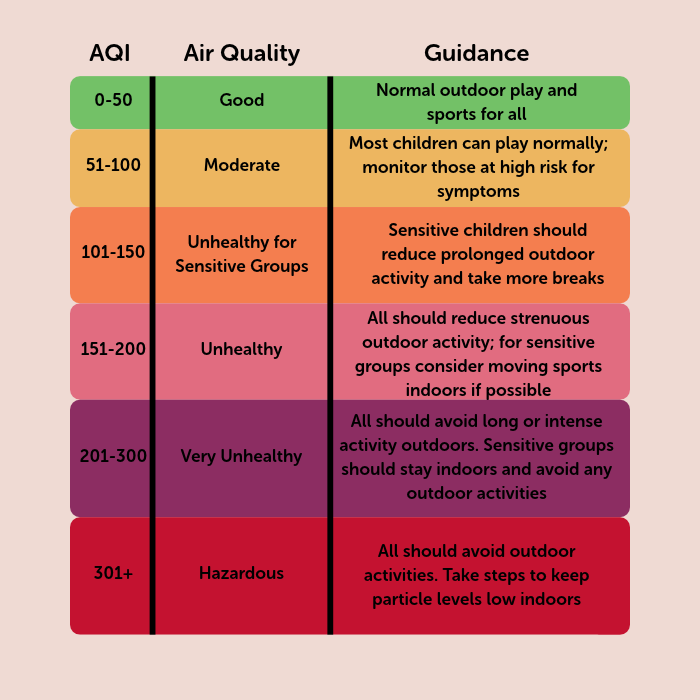
Cómo proteger a su familia
- Revise el AQI diariamente
- Mantenga las ventanas y puertas cerradas cuando la calidad del aire sea deficiente
- Considere comprar un purificador de aire portátil para mejorar la calidad del aire interior
- Use filtros de aire HEPA en su sistema HVAC y reemplácelos como se indica
- Traslade las actividades al interior cuando la AQI no sea saludable
¿Qué pasa con las máscaras?
No hay respiradores o máscaras aprobados que hayan demostrado proteger a los niños pequeños contra las partículas. Los respiradores N95 correctamente ajustados pueden ayudar a los niños mayores cuando la exposición es inevitable, pero permanecer en el interior sigue siendo la mejor protección.
Señales de que el humo de los incendios forestales puede estar afectando a su hijo
Los síntomas incluyen tos, sibilancias, opresión en el pecho, dificultad para respirar, dolor de garganta, ardor en los ojos, dolor de cabeza, fatiga y mayor uso de inhaladores de rescate. Asegúrese de buscar atención de emergencia de inmediato por dificultad para respirar, labios azulados, dolor en el pecho o incapacidad para hablar en oraciones completas.
Si su hijo tiene asma u otros problemas respiratorios crónicos, ¿cómo puede prepararse?
La temporada de incendios forestales es un buen momento para revisar el plan de acción y los medicamentos para el asma de su hijo con su pediatra.
Antes de que llegue el humo:
- Asegúrese de que los medicamentos estén al día
- Mantenga los inhaladores de rescate fácilmente disponibles
- Sepa cuándo aumentar los medicamentos de acuerdo con su plan de acción para el asma
- Comuníquese con su profesional de la salud si los síntomas se vuelven más frecuentes
Recuerde, nunca espere hasta que su hijo tenga dificultades para respirar antes de tomar medidas. Busque atención tan pronto como surjan síntomas preocupantes.