Cómo proteger a los niños de lesiones por escaldaduras y quemaduras
13 de mayo de 2026¿Sabía que 435 niños al día son atendidos en el departamento de emergencias por quemaduras y dos niños al día mueren por lesiones relacionadas con quemaduras? Los niños más pequeños tienen más riesgo de sufrir lesiones por escaldaduras causadas por líquidos calientes o vapor, mientras que los niños mayores tienen más probabilidades de sufrir quemaduras por contacto directo con el fuego. El agua caliente es la fuente más común de lesiones por quemaduras involucradas en más de 1 de cada 5 quemaduras. Los niños menores de 4 años representaron el 51,5% de los casos de quemaduras con la edad más alta para los niños de 1 años. La prevención y el conocimiento son herramientas poderosas para mantener a nuestros niños seguros y saludables. Hablar sobre cómo prevenir estas lesiones por quemaduras puede hacer que nuestros hijos estén en casa y disfruten de una comida deliciosa de manera segura.
Causas comunes de escaldaduras en niños
- Bebidas calientes (café, té o sopa) que se derriban o tiran hacia abajo
- Especialmente los fideos instantáneos que se derraman cuando se sacan del microondas
- Agua de cacerolas, hervidores, jarras y termos
- Vapor de alimentos cocinados en el microondas
- Agua caliente del grifo de fregaderos o bañeras
- Cenizas de carbón
- Quemaduras por fricción, por ejemplo, cintas de correr
- Encendedores y cerillas
- Grasa y aceite de cocina caliente
- Vapor y vapor
- Escapes de vehículos
Pasos sencillos para prevenir lesiones por escaldaduras
En la cocina:
- Mantenga las bebidas calientes y los alimentos fuera del alcance; nunca coloque tazas o tazones cerca del borde de un mostrador o mesa
- Use los quemadores traseros de la estufa cuando sea posible, y gire las asas de las ollas hacia adentro
- Crear una "zona libre de niños" de al menos 3 pies alrededor de la estufa o el horno
- Evite cargar a su hijo mientras cocina o sostiene una bebida caliente
A la hora del baño:
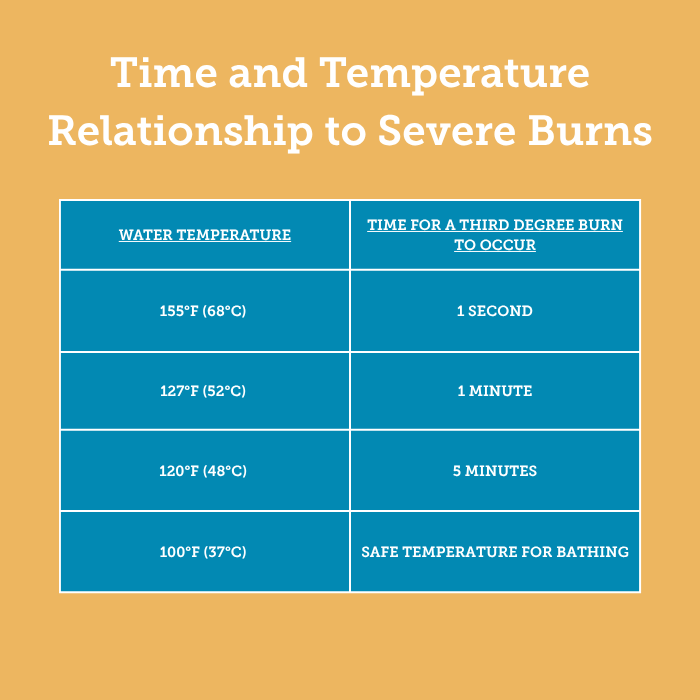
- Para reducir el riesgo de lesiones a su hijo por escaldaduras de agua caliente, se recomienda que tenga instalado un dispositivo para controlar la temperatura de suministro del agua caliente del baño a un máximo de 120 °F (49 °C) o menos para evitar quemaduras. Consulte la guía a continuación para conocer mejor la relación del tiempo y la temperatura con las quemaduras graves
- Siempre pruebe el agua del baño con la muñeca o el codo antes de colocar a su hijo en
-
Llene la bañera con agua fría primero, luego agregue tibia, no al revés
Alrededor de la casa:
- Mantenga los electrodomésticos que calientan el agua (como hervidores, ollas instantáneas y humidificadores) fuera del alcance de los niños
- Enséñeles a los niños mayores sobre los peligros de los líquidos calientes y cómo manejarlos de manera segura
- Nunca deje a un niño desatendido cerca de agua corriente o superficies para cocinar
Qué hacer si ocurre una escaldadura
- Aleje a su hijo de la fuente de calor inmediatamente
- Enfríe la quemadura con agua corriente fría (no fría) durante 10-20 minutos
- NO aplique mantequilla, aceite ni cremas
- Cubra el área con un paño limpio y seco. Puede aplicar agua corriente fría, pero EVITE aplicar hielo o agua helada, ya que esto puede retrasar el proceso de curación
- Busque atención médica llamando al 911 si la quemadura es grande, con ampollas o en la cara, las manos, los genitales o las articulaciones
Y como siempre, ¡llame a su pediatra si tiene alguna inquietud! ¡La educación y la prevención son herramientas poderosas para tener una cocina divertida y segura! Para obtener más estadísticas y consejos de prevención, haga clic aquí.