Llámame tal vez: los números que todo adolescente necesita en su teléfono
3 de febrero de 2026Por: Enjuli Chhaniara, DO
Categorías: Crianza
Entregarle un teléfono celular a su hijo adolescente puede sentirse como un hito y un mini ataque cardíaco. Por un lado, su libertad, independencia y conexión. Por otro lado, confías en un rectángulo de vidrio para ayudarlos a navegar por emergencias, presión de grupo y problemas del mundo real. ¿Cómo podemos ayudar a nuestros adolescentes a navegar por este caos?
Una de las medidas de seguridad más simples y pasadas por alto que puede tomar es asegurarse de que los números de teléfono correctos estén guardados en el teléfono de su hijo adolescente antes de que los necesite. Aquí hay una lista práctica e imprescindible de números de teléfono y por qué cada uno es importante.
Números para guardar
Padres o tutores
Asegúrese de que todos los cuidadores principales estén guardados con nombres completos, números de teléfono y un método de contacto de respaldo si es posible. En caso de emergencia, es posible que los maestros, la policía o el personal médico deban identificarlo y comunicarse con usted rápidamente. Considere agregar un contacto "En caso de emergencia" al teléfono de su hijo adolescente en caso de que alguien necesite acceder a él.
Un adulto de respaldo de confianza
Podría ser una tía, un tío, un abuelo, un amigo cercano de la familia o un vecino. Esta es la persona a la que su hijo adolescente puede llamar si no se puede localizar, se siente incómodo llamándolo o necesita ayuda de inmediato.
Servicios de emergencia
Su hijo adolescente debe saber cómo y cuándo llamar a los servicios de emergencia (911 en los EE. UU.). Los adolescentes a menudo dudan en dar este paso, pero les recuerdan que puede salvar la vida de su hijo o la de otra persona. Hable cuando sea apropiado y asegúreles que está bien llamar si algo se siente inseguro.
Control de envenenamiento
U.S. Poison Control es: 1-800-222-1222. Gratuito, confidencial y disponible 24/7 por errores de medicación, ingestión accidental o exposición química.
Contactos escolares
Dependiendo de la edad y la independencia, guarde los números de la oficina principal de la escuela, los consejeros, la enfermera o los entrenadores deportivos. Estos son a menudo los primeros adultos involucrados durante el día escolar. Es importante tener en cuenta que, si bien puede ser conveniente para su hijo adolescente tener el número de teléfono de un maestro o entrenador, existen riesgos para las conversaciones individuales, ya que puede crear un ambiente para conversaciones inapropiadas. Familiarícese con la política escolar de su hijo adolescente sobre el uso de herramientas apropiadas para la comunicación a fin de prevenir conductas indebidas.
Un contacto de viaje a casa sin preguntas
Si alguna vez su hijo adolescente se siente inseguro o abrumado, debe tener a alguien a quien pueda llamar sin temor a un castigo inmediato. Esto solo funciona si el acuerdo es real y libre de juicios.
Médico de atención primaria o pediatra
Útil para preguntas de salud, inquietudes sobre medicamentos y citas urgentes. Esto también alienta a los adolescentes a tomar posesión de su salud y buscar ayuda cuando sea necesario por problemas de salud.
Hermanos o parientes cercanos
Los hermanos mayores o parientes de confianza pueden ser un salvavidas cuando su hijo adolescente necesita consejo pero no está listo para hablar con un padre.
Líneas de apoyo para la salud mental
988 Línea de vida de suicidio y crisis (llame o envíe un mensaje de texto al 988). Guardar números de apoyo no siembra ideas, las plantas ayudan.
Otra información importante para guardar
En la sección Notas del teléfono de su hijo adolescente, incluya su domicilio, nombres completos de sus padres o tutores, alergias y afecciones médicas. Los socorristas a menudo revisan los teléfonos y esta información puede ser crucial en una emergencia.
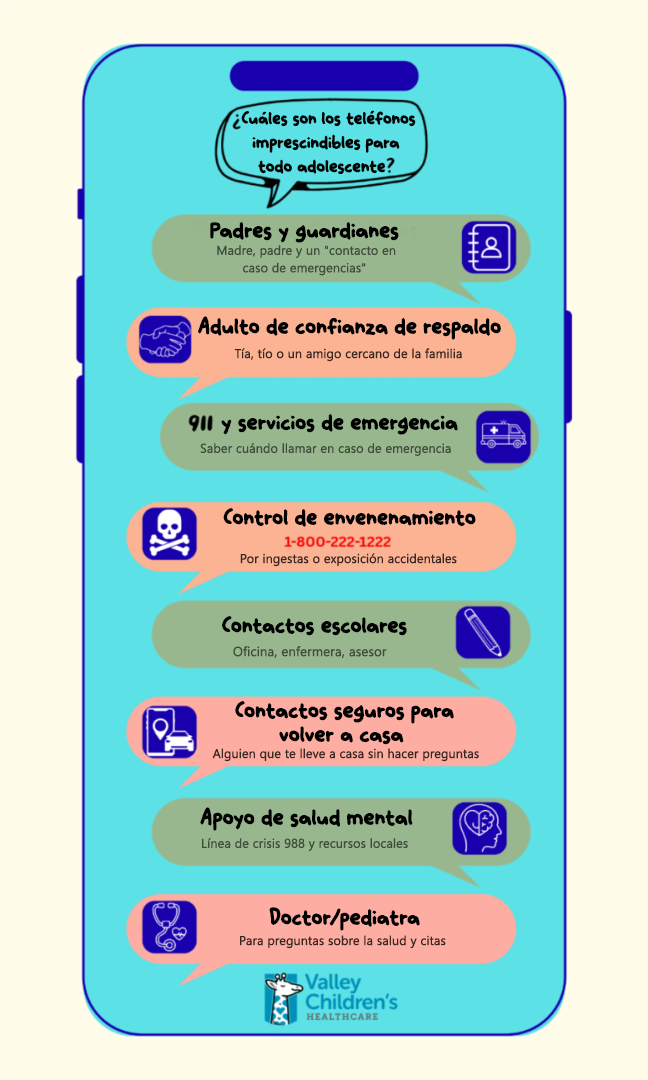
¡Use este útil gráfico para navegar rápidamente qué números deben estar en el teléfono de su hijo adolescente!
¿Qué viene después?
Guardar números es solo la mitad del trabajo. Hablar sobre cómo usarlos es igual de importante. Tenga conversaciones abiertas y tranquilas con su hijo adolescente sobre cómo podrían ser las diferentes situaciones de emergencia (emergencias médicas, sentirse inseguro en una fiesta, quedarse varado sin transporte o presenciar a otra persona en peligro) y a quién debe llamar primero en cada caso. Haga hincapié en que la seguridad viene antes de meterse en problemas, y que pedir ayuda es siempre la opción correcta. Practicar estas conversaciones con anticipación ayuda a los adolescentes a actuar más rápido y con más confianza cuando realmente cuenta. Tomarse unos minutos ahora puede marcar una diferencia para salvar vidas más adelante.